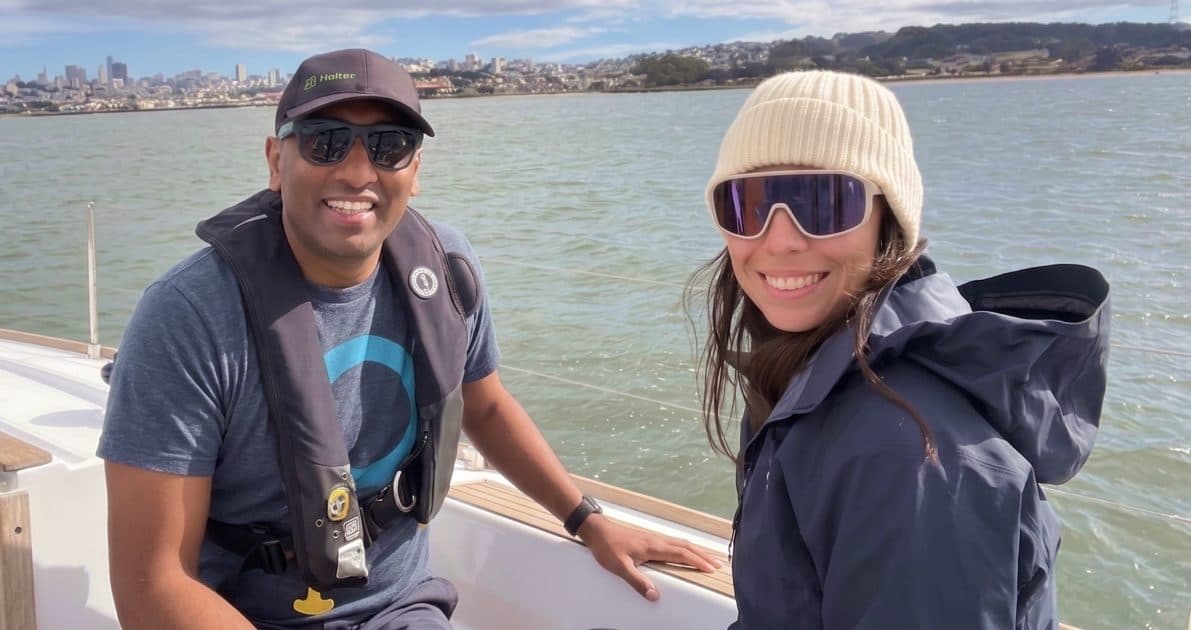
Ubiquity Ventures is growing its investment team: Welcome, Cami Gil!
After nearly a decade as a solo GP, Sunil Nagaraj is bringing on Cami Orozco Gil as an Investor. Cami comes to Ubiquity with experience across startups and venture capital, having worked as an operator, VC and LP. We sat down with both of them to talk about why Ubiquity is growing now, how they ended up working together and what Cami will bring to the firm.
Sunil, you’ve run Ubiquity as a solo GP since 2017. Why add another investor now?
Sunil: I’ve been investing around the idea of “software beyond the screen” for the last 15 years, going back to my time at Bessemer and our early investment in Rocket Lab in 2014.
That investment helped crystallize the idea that software could do much more than live on a screen. It could understand, navigate, perceive and actuate in the physical world. That became the foundation for Ubiquity when I started the firm in 2017.
What’s changed in the last year is that the rest of the world has started to coalesce around a name for much of this: physical AI. There’s more innovation, more founders and a much larger ecosystem forming around the category. We decided this was the right time to double down, including expanding our team and increasing the support we can provide to portfolio companies.
What were you looking for in a second investor, and what made Cami the right person?
Sunil: Ubiquity has always been built around personal relationships. For founders, that means knowing there is a person supporting you throughout the journey, knowing you can reach us day or night, and knowing we can move quickly and with conviction.
As we thought about growing the team, we were looking for an unusual combination: someone deeply technical who also had an incredible ability to connect with people.
We looked pretty widely. It turned out the answer was already under our nose.
I had gotten to know Cami through our LP events, where she was the lead representing one of our institutional LPs. She communicated with incredible clarity, was genuinely curious about the technologies underlying our portfolio companies, and brought experience as an operator, VC and LP. That combination was very hard to find.
Cami, how did you get from starting your career in tech to investing in companies putting software into the physical world?
Cami: I grew up in Colombia and moved to Germany when I was 18. I was a big Formula 1 fan, and part of the thinking was pretty simple: if you want to learn how things get built, go where they’re built.
I studied business and computer science and started my career at NetApp, where I learned how a large technology company actually works. Then I joined Demodesk, a YC company in Munich, where I wore whatever hat was missing that week, from GTM and sales to fundraising. That’s where I learned what an early-stage team actually needs from an investor.
From there I moved into investing at Symbia VC, backing companies using software to change industries like manufacturing, materials and construction. That’s where the thesis clicked for me. Some of the most underserved industries were physical ones, the teams tackling them were deeply technical, and very few investors were funding them early.
You later became an LP evaluating venture funds. What made Ubiquity stand out?
Cami: At the earliest stage, there often isn’t much traction to evaluate yet, so I’m looking closely at the manager’s point of view. Do they understand the market and the technology well enough to have an edge and build a thesis? I’m also biased toward managers who can tell you what they won’t do. If a portfolio reads like a list of the last 12 hot categories, that tells you something.
I also look for discipline around ownership and check size. Those are two of the few things an early-stage investor can actually control, and managers who drift there tend to drift elsewhere too.
And then there’s the firm itself. Are they building the infrastructure, processes and culture to last beyond one fund? Do they have operating experience and a network that can actually help founders? At seed, the work starts after the term sheet.
Ubiquity checked all these boxes, which is why we invested at Allocate. Sunil had also been investing around physical AI since 2010’s, long before the category had a name. That kind of pattern recognition is hard to replicate. The difference between diligencing a fund and joining one is smaller than people think.
How did that relationship turn into you joining the firm?
Cami: After I underwrote the LP commitment to Ubiquity, Sunil and I stayed in close touch. He shared career advice and we had discussions about the market outlook with this physical AI thesis becoming more and more relevant. We both witnessed the growing number of founders building in the category and fed on each others’ excitement. When he mentioned this was leading to him building out the investment team, it was a pretty easy decision for both of us. I already knew the portfolio, I’d already done the diligence, and I knew what it was like to work with Sunil. I’d rather go deep on one thesis I really believed in than spread myself across many.
Deeptech is attracting a lot more founders and capital. What does having two technically-trained investors change for Ubiquity?
Sunil: Deep tech demands deep expertise to understand the technologies and bring them to market. I think that applies to investors as much as founders.
Cami and I are both super technical, and we love immersing ourselves in technology every day. As more founders and capital enter the category, having that technical depth to evaluate opportunities becomes even more important.
Cami, when a deeptech founder starts pitching you, what are you listening for?
Cami: Three things.
- Domain expertise: Do they deeply understand the problem and their customers?
- Pull: Can they attract the right teammates, customers and partners?
- Product: Do they understand their technology better than anyone else?
What areas of physical AI are you most excited to dig into?
Cami: Broadly, I’m interested in traditional industries that AI hasn’t reached yet. Construction is a big one. It’s a huge, fragmented industry that’s still relatively untouched, and I don’t think the team that will really change how the industry works has been funded yet.
Manufacturing is another area I’m excited about. The software layer that people have talked about for years is finally becoming possible rather than theoretical. Ocean technologies are interesting for a different reason: there’s an enormous amount of economic activity and still very little instrumentation.
And then there is consumer, which might be less obvious for a physical AI fund. I think the next wave of consumer technology is going to show up in hardware and ambient software.
What are you nerdy about when you’re not evaluating companies?
Cami: I love designing and planning commercial spaces and thinking about how a room gets used, where people naturally move and what makes someone want to stay.
I also build wood furniture when I have time. So far I have done dining tables, coffee tables and one bench! My favorite thing I’ve built was this breakfast table using wood, plant pots and clay! The best part is brainstorming how to make my vision come to life and then using my hands to make it work.
And I’m learning to DJ. Not great yet!
ㅤㅤㅤㅤㅤㅤㅤㅤ ㅤㅤㅤㅤㅤㅤㅤㅤ ㅤㅤㅤㅤㅤㅤㅤㅤ ㅤㅤㅤㅤㅤㅤㅤㅤ ㅤㅤㅤㅤㅤㅤㅤㅤ ㅤㅤㅤㅤㅤㅤㅤㅤ ㅤㅤㅤㅤㅤㅤㅤㅤ ㅤㅤㅤㅤㅤㅤㅤㅤ ㅤㅤㅤㅤㅤㅤㅤㅤ
Last question: Where can founders expect to run into the two of you?
Sunil: We’re going to be out and about a lot more. We host monthly gatherings where we get to know founders, technologists, students and other people building interesting things, and you’ll see Cami and me at deeptech events throughout the year. If you’re working on something that feels like a fit for Ubiquity, or you have a group of nerds we should get to know, reach out.
